

ANSI A4-A9 Cut Levels Explained for North American Safety Glove Buyers
Oct 26, 2026
Leave a message
you source cut-resistant gloves for the US and Canadian markets, you will run into ANSI/ISEA 105 cut ratings constantly. Unlike the EN 388 standard widely used in Europe, North America relies on the A1–A9 scale tested via the TDM-100 blade method. While A1–A3 cover low-risk handling, A4 through A9 represent the most frequently specified grades for industrial, warehouse, manufacturing and automotive applications.
At NEXPROTEC, many of our HPPE cut-resistant glove orders for North America call out A4, A5, A6, A7, A8 or A9. This guide breaks down what each rating means, the minimum cut force required, typical working scenarios and common material builds, so you can avoid mis-specifying gloves for your customers.
What Is the ANSI/ISEA 105 Cut Test?
All ANSI cut levels are measured using the TDM-100 test blade, which records the gram force needed to slice through the glove sample. Higher gram force equals better cut resistance. This is the same TDM test method referenced in ISO 13997, making it easier to compare performance once you understand the scale.
Important note: ANSI ratings are not interchangeable with old EN 388 Coupe test results. A glove that scores well under the European Coupe test may not reach the same ANSI A level under TDM testing. This is one of the most common mistakes new North American PPE buyers make.
Breakdown of ANSI A4 to A9 Cut Levels
A4 | 1500 g – 2199 g
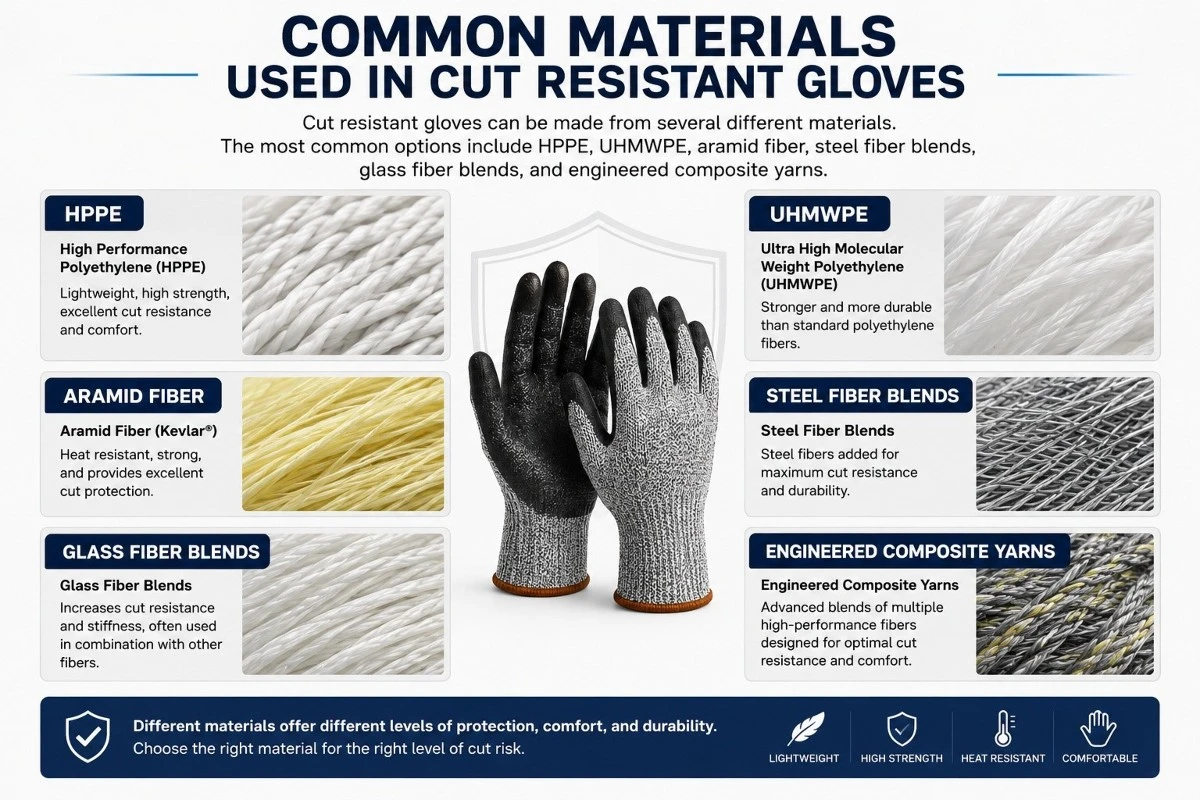
A4 is the entry-level industrial cut grade for North America. It is the most popular all-round choice for general metal edge handling, appliance assembly, HVAC work, glass sorting and mid-risk warehouse operations. Most A4 gloves use HPPE blended with glass fiber and nitrile or PU coating. It balances decent cut protection with good dexterity and affordable pricing for high-volume distribution.
A5 | 2200 g – 2999 g
A5 is widely specified for sheet metal processing, metal stamping, automotive parts handling and recycling facilities. It offers a clear step up from A4 for sharper, repeat cut hazards. HPPE-glass blends or lightweight aramid mixes are typical for A5. Many Amazon PPE listings and industrial distributors stock A5 as their primary heavy general-purpose cut glove.
A6 | 3000 g – 3999 g
A6 sits in the heavy-duty mid-range. It suits continuous exposure to sharp steel edges, tubing fabrication and aluminum extrusion handling. Buyers often select A6 when A5 gloves show too many hand injuries in their safety incident logs, but they still want to avoid the stiffness and higher cost of A7+.
A7 | 4000 g – 4999 g
A7 is a high cut-resistance grade for severe hazards. Common applications include sharp scrap metal, heavy plate handling and knife-use workflows in manufacturing. Formulations usually combine HPPE, aramid and sometimes stainless steel filament. These gloves are thicker and less flexible than A4/A5 models.
A8 | 5000 g – 5999 g
A8 is reserved for very aggressive cut risks. It is seen in metal fabrication, die casting and sharp heavy component assembly. Dexterity drops noticeably at A8. Customers should be warned that these gloves are not suitable for fine assembly work, even though cut protection is excellent.
A9 | ≥6000 g
A9 is the top ANSI cut rating, the highest performance tier on the A scale. It is used for the most extreme sharp-edge hazards such as heavy steel, sharp casting flash and specialized metal processing. A9 gloves normally contain stainless steel fiber or heavy aramid blends. They carry a premium cost and are usually ordered for specific high-risk job roles rather than general site-wide use.
How to Choose Between A4–A9 for Your US Customers
Pick A4 for broad distribution, light industrial and replacement sales; best-selling SKU for most new North American glove lines
Pick A5 for automotive, sheet metal and standard manufacturing (the sweet spot of protection, comfort and cost)
Pick A6 for sites with proven cut incidents on A5 gloves
Pick A7–A9 only when the end user's job hazard assessment confirms severe sharp-edge exposure
A common error is over-specifying: ordering A7 or A9 for simple warehouse tasks. The gloves become bulky, reduce worker grip comfort and raise your landed cost unnecessarily.
How NEXPROTEC Supports ANSI Rated Glove Orders
We build HPPE cut-resistant gloves targeted to exact ANSI A4 through A9 requirements for US and Canadian clients. We can adjust liner blends, coating types (nitrile, PU, sandy nitrile) and gauge thickness to hit your target rating while staying within your budget.
Before bulk production, we can submit samples for third-party TDM testing to validate ANSI performance, which is critical for brands selling on Amazon, to safety distributors or for corporate safety procurement.
FAQ
Can I convert EN 388 cut scores directly to ANSI A levels?
No. EN 388's older Coupe test and ANSI TDM-100 use different blades and test mechanics. Side-by-side lab testing is required for reliable comparison.
Is A9 always better than A4?
Not always. A9 gloves are stiffer, less breathable and more expensive. If the hazard level only needs A4 protection, A9 will hurt worker comfort and your margin.
Are ANSI A ratings required to sell gloves in the USA?
For industrial PPE sales, buyers and end safety managers expect clear ANSI/ISEA 105 labeling and supporting test reports. Many distributors and marketplaces will reject products without valid TDM test data.
Final Takeaway
ANSI A4–A9 ratings give North American buyers a clear, hazard-focused way to select cut-resistant gloves. A4 and A5 make up the bulk of mainstream demand, while A6 to A9 serve specialized heavy metal and high-risk manufacturing.
When you place an order, always confirm the target ANSI level and ask your supplier for TDM test documentation. This avoids receiving gloves that look identical but fail the required cut performance for the US market.
Contact NEXPROTEC for HPPE cut-resistant glove samples built to your target ANSI A rating, with custom coating and sizing for your North America catalog.
Send Inquiry