


Why Are Heat‑Resistant Gloves So Bulky?
Sep 07, 2026
Leave a message
A heat‑resistant glove can pass all required lab tests yet still get rejected by front‑line workers.
The most frequent complaint is straightforward: the glove is simply too thick. Fingers cannot bend freely, small parts become hard to manoeuvre, and operators lose confidence in their grip.
This raises a core product‑development challenge: how do you build a glove with reliable thermal protection, without turning it into a stiff, unwieldy oven mitt?
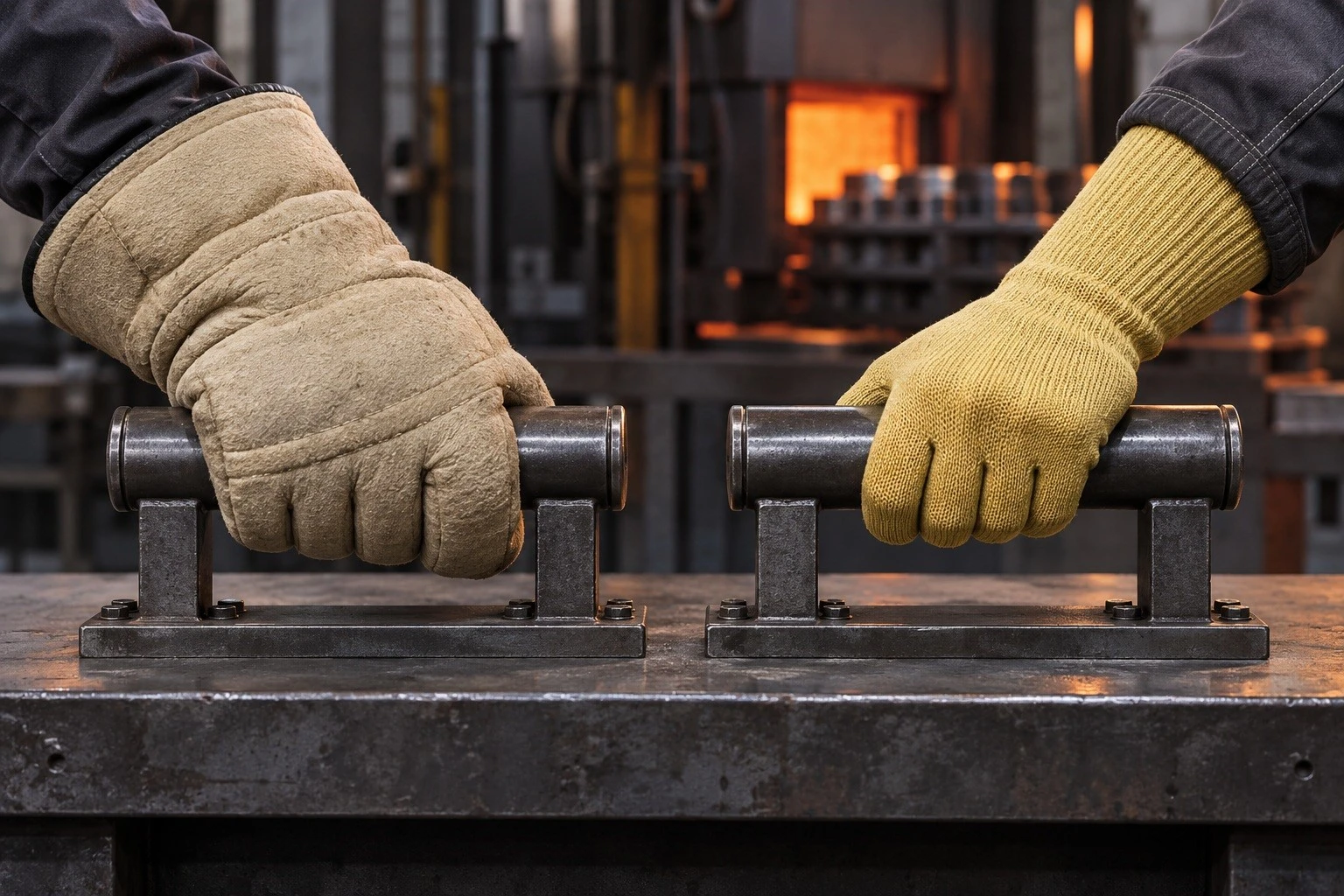
Heat Protection Relies on Delaying Heat Transfer
The primary job of insulated heat‑resistant gloves is to slow heat conduction toward the skin.
Adding thicker or heavier insulation generally delays heat penetration - but it also adds bulk. Once the glove becomes overly bulky, finger mobility and tactile sensitivity start to drop off.
This trade‑off cannot be fully eliminated. Product design aims to strike the optimal balance for each real‑world application.
A worker briefly grabbing a hot oven tray does not require the same glove build as someone holding a heavy metal casting for 20 seconds. Using one‑size‑fits‑all specifications for both jobs results in unnecessary bulk for one scenario, or insufficient heat safety for the other.
Start Design Work Around Actual Handling Requirements
Many buyers kick off product development by chasing the highest possible temperature rating. This often leads designers to stack extra layers, before fully understanding how the glove will actually be used on‑site.
A far better approach is to start with the job itself:
- What exact objects will workers handle?
- How heavy are these items?
- What is the typical contact duration per grip?
- Which areas of the hand make direct contact with hot surfaces?
- Is full five‑finger flexibility essential?
- How fast must workers be able to release hot parts?
- Will this task repeat continuously across an entire shift?
When contact time can be kept short, it is often possible to specify a lighter, less bulky glove construction.
Multi‑Layer Gloves Risk Internal Layer Shifting
Many heat‑resistant gloves combine an outer shell, thermal barrier and comfort inner lining. Without careful engineering, these separate layers can shift independently during use.
Operators may notice the lining twists inside the glove, fingertips fail to follow hand movement, or material pulls back when releasing objects.
Well‑engineered multi‑layer design is about more than just material selection. All layers must move in unison while gripping and flexing fingers.
Critical design details include:
- Bonding / attachment between lining and outer shell
- Ergonomic finger shaping
- Thumb placement and angle
- Seam positioning
- Material stretch properties
- Liner shrinkage after use and washing
- Finished fingertip length
A well‑constructed multi‑layer glove can deliver far better controllability than a poorly assembled glove of equal thickness.
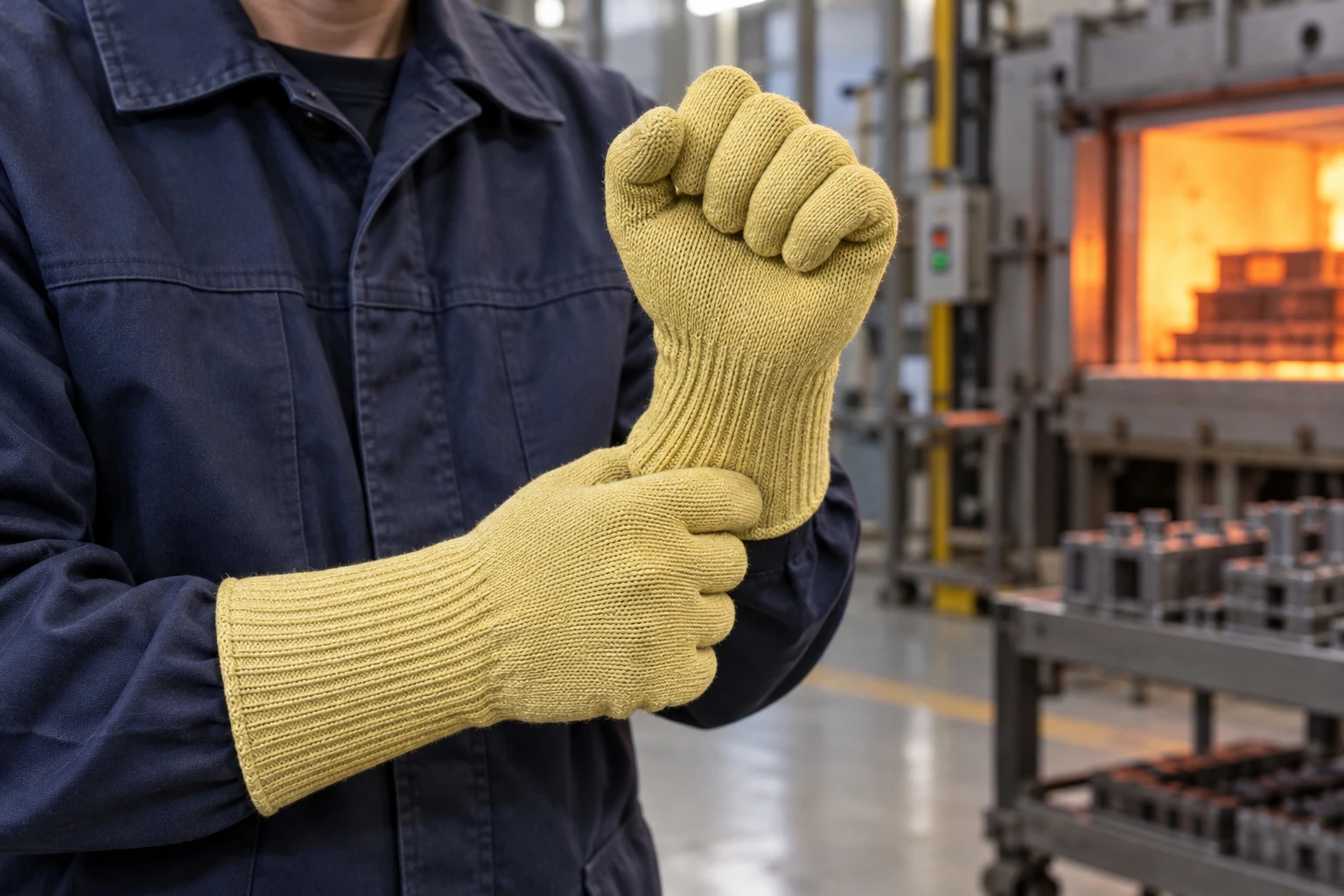
Finger Pattern Design Counts As Much As Raw Materials
Flat, straight‑cut fingers are cheap and simple to manufacture, yet human hands do not stay flat during manual work.
Pre‑curved, anatomically shaped fingers reduce muscle effort when closing the hand. This delivers more secure grip when manipulating cookware, hand tools or hot industrial components.
Thumb design deserves special attention. A poorly angled thumb makes pinching, lifting and wrapping hands around handles very difficult.
A slimmer‑looking glove does not automatically mean better flexibility. Pattern cutting and joint placement frequently outweigh overall appearance.
Target Reinforcement On High‑Risk Contact Zones
Heat exposure is never evenly distributed across the whole hand.
For most industrial tasks, direct heat contact concentrates on:
- Central palm area
- Fingertips
- Thumb and index‑finger region
- Outer side of the hand
- Lower palm close to the wrist
Instead of adding heavy insulation uniformly across the whole glove, manufacturers can apply targeted thermal reinforcement and grip padding only on high‑contact zones. This preserves mobility for areas that face minimal heat risk.
That said, localized protection must match real‑life hand positions. Reinforcing incorrect spots only adds extra weight without solving heat hazards. Reference photos showing actual hand‑grip positions are extremely valuable during custom development.
Improved Grip Helps Shorten Contact Time
Grip performance is a key part of heat protection.
If a hot tray or workpiece starts to slip, workers tend to hold it longer, squeeze harder or readjust their hand position. Every readjustment extends heat exposure time.
Depending on operating temperature and end‑use, silicone embossments, textured coatings or quality leather surfaces can boost grip security.
Grip materials need to be assessed against these practical factors:
- Thermal stability under operating temperature
- Durable adhesion to glove substrates
- Flexibility after repeated wear
- Resistance to oil, grease and moisture
- Impact on total glove thickness
Oversized thick grip patterns are not always beneficial; they may create uncomfortable pressure points and restrict finger bending.
Outer Shell and Inner Lining Serve Distinct Purposes
The outer shell needs to stand up to flame, abrasion, sparks and direct hot‑surface contact. The inner lining focuses on slowing heat transfer and wearing comfort.
Trying to use one single heavy‑duty material for every function often results in stiff, overly bulky gloves.
Layered design lets each material fulfil its dedicated role:
- Outer shell: surface wear, spark and flame resistance
- Thermal barrier: core heat insulation
- Inner lining: comfort and sweat/moisture management
- Local grip material: secure handling performance
The ideal material stack depends heavily on end applications: commercial kitchens, welding, foundries, ovens or general industrial maintenance.
Long Cuffs Also Influence Overall Dexterity
Cuff length is frequently decided purely based on required coverage area.
A longer cuff delivers enhanced wrist and forearm protection, yet it can catch on clothing, limit wrist rotation, or make the glove hard to take off quickly.
Buyers should evaluate all below points for cuff specification:
- Required skin coverage for heat / spark protection
- Whether the cuff goes over or under work sleeves
- Requirement for fast, emergency glove removal
- Wrist closure mechanism
- Wrist movement range during daily tasks
- Risk of sparks and hot debris getting inside
A well‑designed cuff protects operators without introducing new handling limitations.
Prototype Evaluation Requires Real‑World Simulation
You cannot judge true dexterity just by inspecting static samples laid on a table.
During prototype testing, operators should complete realistic job‑specific movements:
- Gripping actual workpiece handles
- Lifting items of real‑world weight
- Transferring hot parts between surfaces
- Operating surrounding machine controls
- Quick release of hot objects
- Repeating motions over multiple cycles
Collect precise feedback on where the glove feels restrictive. A general comment of "too bulky" could actually stem from over‑long fingers, an overly wide palm, shifting lining, or rigid grip patterns. Each root cause calls for a different design adjustment.
Balanced Custom Heat‑Resistant Glove Development
Nexprotec provides custom heat‑resistant glove development for buyers seeking the right balance between thermal safety, flexibility and grip.
We build prototypes prioritising different project goals:
- Maximum possible dexterity
- Well‑rounded heat protection with solid mobility
- Higher short‑term contact‑heat resistance
Final glove construction should always be validated via hands‑on sample trials and relevant standard performance testing.
If your current heat‑resistant gloves feel too thick and awkward for staff use, share your application details: working temperature, typical contact time, photos showing real‑world grip posture, and required compliance standards. This gives our development team a practical starting point - rather than simply stacking extra material layers.
RFQ
Submit your RFQ to Nexprotec if you are sourcing flexible heat‑resistant gloves for kitchens, foundries, welding or industrial maintenance.
To help our technical team propose suitable prototypes and quotations, kindly provide key information as below:
- Heat hazard type and working temperature
- Typical contact duration and repetition frequency
- Object weight and hand grip photos if available
- Required protection zones and cuff length
- Dexterity demand: fine handling or heavy‑duty gripping
- Mechanical risks: abrasion, cut resistance requirements
- Certification requirements e.g. EN 407, EN 388, REACH
- OEM / ODM requirements, estimated order volume and target market
Reach out through our Contact Us page. Our sales‑engineering team will reply within 2 working days with product suggestions and sample arrangements.
Note: Higher temperature ratings do not equal better on‑site performance. Balancing insulation, layer construction and dexterity for your exact task is critical.
Send Inquiry