


What Temperature Can Heat‑Resistant Gloves Withstand?
Sep 07, 2026
Leave a message
"What temperature can these gloves withstand?"
This is almost always the first question buyers raise when sourcing heat‑resistant gloves - and it is also one of the most commonly misunderstood points.
A glove can survive brief touch against a hot metal surface, yet fail to protect hands if workers hold that same hot item for extended periods. Temperature ratings alone do not tell the full performance story. Contact duration, heat source type, glove build and real‑world working conditions all play critical roles.
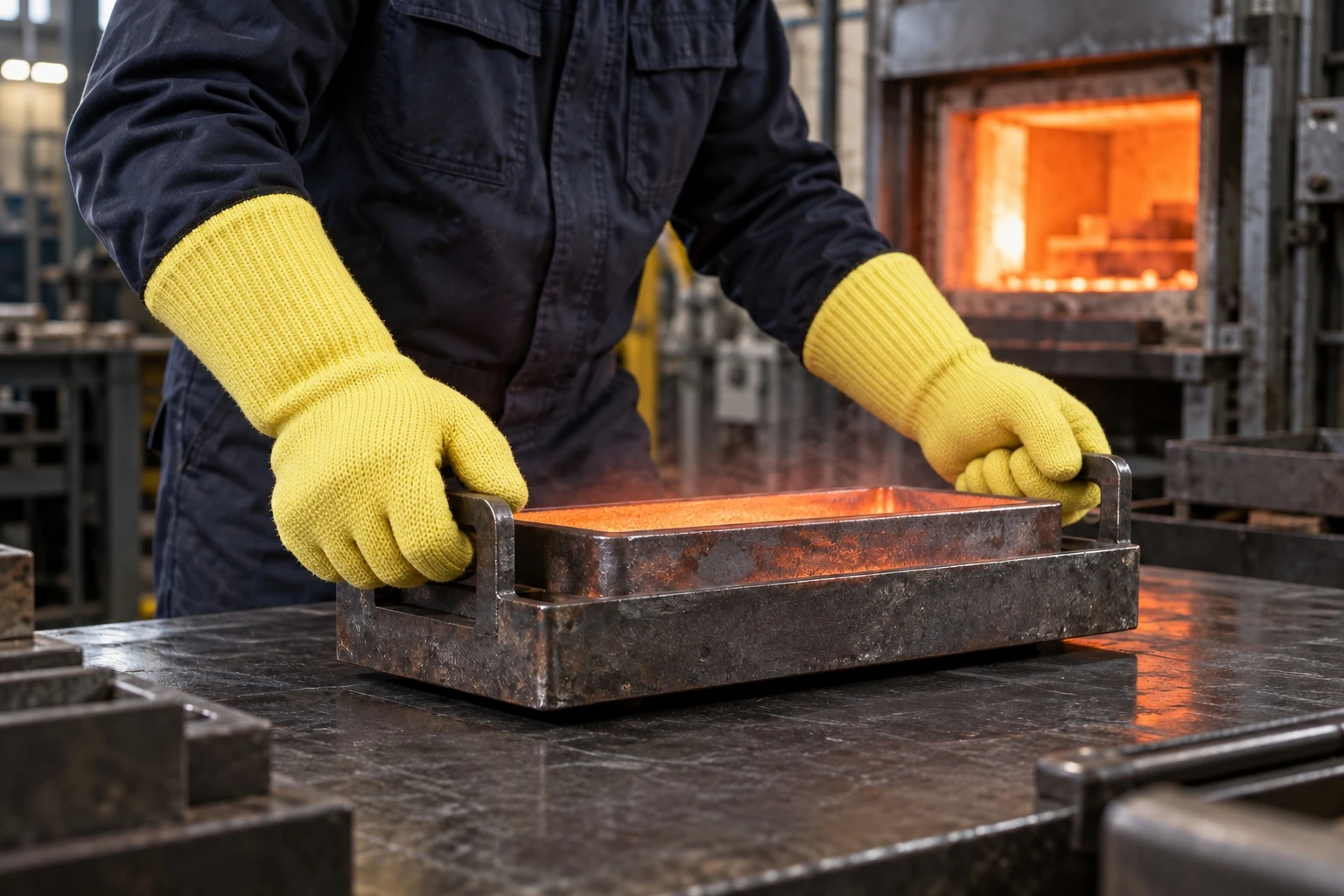
300°C for How Long?
Claims such as "heat resistant up to 300°C" carry limited value without supporting details on exposure time and testing standards.
Touching a 300°C surface for one second is vastly different from gripping it for 15 seconds. Heat keeps transferring through glove layers for as long as contact continues.
Even if a glove feels protective at first, inner surface temperatures can rise rapidly. For this reason, buyers need to ask two key questions together:
- What is the actual contact temperature?
- How long will workers hold the hot object?
For repetitive handling jobs, cooling intervals between contacts also matter. Gloves may not have enough time to dissipate heat before the next cycle of use.
Contact Heat Is Not the Only Heat Hazard
Multiple forms of heat put gloves under stress, and each behaves differently.
Contact heat
Contact heat happens when glove material touches hot objects directly. Typical examples include:
- Oven trays
- Cookware handles
- Hot molds
- Metal castings
- Heated machine components
- Foundry shells
Contact pressure and holding time determine how fast heat penetrates glove materials.
Convective heat
Convective heat comes from circulating hot air or gas around the hands. It is frequently found around ovens, furnaces, steam pipelines and industrial heating equipment.
Gloves built only for short‑duration surface contact often offer inadequate defence against ongoing exposure to hot airflow.
Radiant heat
Radiant heat transfers energy from hot sources with no physical contact. Staff working near open furnaces, molten metal or high‑heat machinery absorb radiant heat even before touching any hot parts.
Aluminized fabrics are widely used to reflect radiant heat. Even so, they are not universally suitable for heavy‑duty contact‑heat operations.
Small flames
Flame‑resistant gloves are engineered to resist ignition and slow flame spread under standardized lab tests. This does not mean they can be submerged in fire or withstand unlimited flame exposure.
Be cautious of marketing phrasing like "fireproof gloves". No wearable hand protection delivers endless fire resistance.
Material Alone Does Not Determine Temperature Limits
Aramid fibres, leather, cotton, glass fibre, silicone and metal mesh are all common materials for heat‑resistant gloves. Still, listing a base material cannot guarantee the end‑product heat performance.
Take aramid outer shells as an example: while aramid delivers good inherent heat resistance, overall performance is shaped by many variables:
- Fabric weight
- Number of material layers
- Knit or weave density
- Inner insulating liners
- Seam and stitch construction
- Palm reinforcement design
- Internal moisture build‑up
- Wear damage and surface contamination
Two gloves manufactured with aramid can show huge gaps in heat resistance and flexibility. Buyers should assess complete glove construction instead of relying purely on material specifications.
Dry and Wet Conditions Produce Very Different Results
Moisture accelerates heat transfer through glove fabrics.
When gloves get wet from water, steam, sweat or cleaning agents, heat penetrates far faster than dry‑lab test results suggest. This risk deserves close attention for commercial kitchens, food processing plants and outdoor industrial sites.
Performance data gathered under dry test conditions will not automatically reflect real‑world wet‑environment performance.
Share these working‑condition details with your supplier if applicable:
- Steam exposure
- Hot water splashes
- Oil contact
- Cleaning chemical exposure
- Heavy hand perspiration
- Frequent washing cycles
Waterproof outer coatings can help in certain scenarios, yet they often lower breathability and increase overall hand discomfort during long shifts.
Thicker Gloves Do Not Always Equal Better Safety
Adding insulating layers slows heat transfer, but excessive thickness brings practical drawbacks.
Bulky heavy gloves can hinder:
- Secure grip on narrow handles
- Precise tool operation
- Picking up tiny work pieces
- Sensing object slippage
- Natural finger bending
- Quick release of hot items
If gloves hamper normal work movements, operators may take them off or wear them improperly. Reliable thermal safety balances heat protection and usable dexterity.
Key Details Buyers Should Share With Suppliers
Rather than only requesting a maximum temperature rating, describe your actual on‑site workflow.
Helpful specifications include:
- Temperature of hot objects or heat sources
- Typical contact duration
- Frequency of hot‑part handling per minute
- Object shape and weight
- Workplace conditions: dry, wet, oily or steamy
- Required finger mobility
- Hand/ wrist coverage area needed
- Compliance requirements such as EN 407
Photos or short videos showing real‑life handling operations are extremely valuable during product customisation and sample development.
Test on Your Exact Glove Construction
Lab test reports are valid only for the exact glove build that was tested.
Modifying outer fabric, inner insulation, coating, stitching or glove thickness will alter heat‑resistance performance. Test data from a visually similar glove cannot confirm performance for your custom variant.
For newly developed glove designs, complete formal testing only after construction is fully stabilised. Always run practical simulation tests matching real‑job conditions on samples before full‑scale mass production.
Sourcing Heat‑Resistant Gloves From Nexprotec
Nexprotec designs and manufactures heat‑resistant gloves for commercial kitchens, foundry work, welding tasks, industrial maintenance and many other high‑temperature handling scenarios.
Our glove builds may combine aramid fibres, heat‑resistant linings, leather, silicone grip layers and other protective components. The optimal solution depends on heat type, contact time and dexterity requirements for your job.
When asking for product recommendations, avoid sending maximum temperature alone. Tell us what parts workers handle, how long they hold hot items, and what hand mobility your tasks demand. This enables us to propose realistic glove designs and arrange appropriate sampling.
Request for Quotation (RFQ)
If you are sourcing heat‑resistant gloves for industrial facilities, foundries, commercial kitchens or maintenance operations, submit your RFQ to Nexprotec for a tailored glove solution.
To help us offer accurate recommendations and formal quotation, please share as many of the below details as possible when sending your inquiry:
Working environment & heat exposure
Heat source type: contact heat, convective heat, radiant heat or flame exposure
Actual contact temperature workers will encounter
Typical contact time per handling cycle
Repetition frequency: how many hot‑object handling cycles per minute
Workplace conditions: dry, wet, steam, oil, sweat or frequent cleaning
Glove functional requirements
Required hand protection coverage: glove length (25 cm / 35 cm or custom cuff length)
Necessary dexterity level: fine part handling or heavy‑duty gripping
Expected mechanical risks: cut, abrasion resistance requirements
Size range needed (S‑L)
Preferred material options: aramid, leather, aluminized fabric, silicone etc.
Compliance standards
Mandatory certifications: EN 407, EN 388, REACH, LFGB for food‑contact use or other regional standards
Important: test reports shall correspond to your exact glove construction, not reference similar existing models
Order & project information
Estimated order quantity: trial order volume and annual consumption forecast
OEM / ODM needs: custom logo, custom colour, special packaging
Target lead‑time and expected delivery schedule
Destination market
Photos or short videos showing real‑life handling scenarios are highly helpful for our technical assessment.
Send your RFQ inquiry via our Contact Us page, and our engineering‑sales team will get back to you within 2 working days with product suggestions, sample options and pricing.
Note: Only providing a single maximum temperature value is insufficient for glove selection. Real‑world performance depends on contact duration, heat type, moisture and full glove construction.
Send Inquiry