

Industrial Aramid Knitted Heat Resistant Gloves: A Practical Guide for Manufacturing and Industrial Buyers
Nov 19, 2026
Leave a message
In many industrial workplaces, workers handle materials that retain heat long after leaving a production process. Metal components, molded parts, glass products and heated equipment can all create hand-contact hazards during manufacturing, inspection and material handling.
For these jobs, ordinary knitted work gloves may not provide sufficient thermal protection. At the same time, heavily insulated gloves can restrict finger movement and make routine handling more difficult.
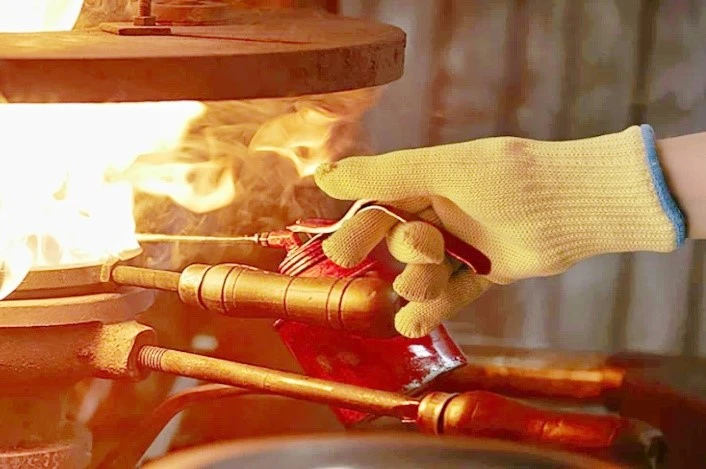
Industrial aramid knitted heat resistant gloves offer a practical alternative for applications that require a balance of thermal protection, mechanical durability and hand flexibility.
Unlike bulky thermal mitts, knitted aramid gloves use a textile construction that follows the natural shape of the hand. This makes them suitable for selected industrial operations where workers need to maintain control while handling warm or hot materials.
This article examines how these gloves are constructed, where they are used and what industrial buyers should evaluate before placing a wholesale or OEM order.
1. Why Are Aramid Knitted Gloves Used in Industrial Environments?
Aramid is a family of high-performance synthetic fibers used in protective clothing and industrial textiles.
Its molecular structure gives it useful characteristics for applications involving elevated temperatures and mechanical stress. Depending on the fiber type and finished construction, aramid materials can provide inherent flame resistance, good strength and resistance to thermal degradation.
For industrial glove manufacturing, these properties make aramid a useful choice for knitted protective liners.
Compared with conventional cotton or polyester work gloves, aramid-based knitted gloves offer several advantages:
- Thermal stability: Aramid fibers are designed to retain their structure under heat exposure better than many ordinary textile fibers.
- Flame resistance: Inherently flame-resistant aramid fibers do not behave like ordinary combustible fabrics.
- Mechanical strength: The fibers can contribute to resistance against abrasion and mechanical wear.
- Flexible construction: Knitting allows the glove to follow hand movements without requiring a bulky leather structure.
- Industrial versatility: Aramid yarn can be incorporated into different glove constructions depending on the intended application.
However, the fiber itself does not determine the complete protection level. Yarn composition, knitting density, glove thickness, lining and additional reinforcement all influence finished-product performance.
2. How Does the Knitted Construction Affect Glove Performance?
A knitted aramid glove is not simply a piece of heat-resistant fabric shaped into a hand.
The knitting structure plays an important role in how the glove fits, moves and performs during industrial work.
Gauge and Fabric Density
Gauge refers to the number of knitting needles per inch on the knitting machine. Different gauges produce different fabric structures.
For example:
| Construction | General Characteristics | Typical Considerations |
|---|---|---|
| 7G–10G | Coarser and heavier knit | More substantial fabric construction |
| 13G | Medium-density knit | Balance of flexibility and fabric coverage |
| 15G–18G | Finer knit | Closer fit and greater flexibility |
These are general construction comparisons, not guaranteed heat-protection rankings. A higher gauge does not automatically mean better thermal performance.
For industrial heat-resistant gloves, buyers should evaluate the complete construction rather than selecting a gauge based on numbers alone.
Seamless Knitting
Seamless knitted construction reduces the need for separate fabric panels and sewn finger joints.
This can provide several practical benefits:
- More natural hand movement.
- Fewer bulky seams.
- Consistent glove shape.
- Comfortable fit during repetitive handling.
For operators who repeatedly pick up, position and transfer components, these details can make a difference throughout a working shift.
Uncoated and Coated Designs
Aramid knitted gloves can be produced in different configurations.
An uncoated version maintains direct textile contact and may be suitable for applications where flexibility and fabric handling are priorities.
Other versions may include palm coatings or surface treatments to improve grip or abrasion performance.
However, coatings must be selected carefully. Some polymer coatings have different thermal characteristics from the underlying aramid yarn. Their performance must be evaluated as part of the finished glove.
3. Where Are Industrial Aramid Knitted Heat Resistant Gloves Used?
The suitability of an aramid knitted glove depends on the actual working temperature, contact duration, handling method and additional hazards.
Several industries use this type of construction for selected operations.
Metal Fabrication and Component Handling
Metal fabrication facilities frequently handle components after cutting, forming, machining or other manufacturing processes.
Workers may need to move warm parts, inspect components or transfer materials between workstations.
Aramid knitted gloves can be considered where the required contact-heat protection and mechanical performance have been verified.
For sharp metal edges, additional cut protection may also be necessary.
Glass Manufacturing
Glass production involves high-temperature processes, but not every operation exposes workers to the same level of heat.
Some tasks involve handling glass products after cooling or moving components during intermediate production stages.
Knitted aramid gloves may be suitable for selected handling operations where flexibility is important. Direct contact with molten glass or extremely hot glass should require purpose-designed protection with appropriate test evidence.
Automotive and Industrial Manufacturing
Automotive component production involves molding, forming, assembly and inspection processes.
Some operations require workers to handle warm components repeatedly while maintaining control over their positioning.
A knitted construction can be useful when operators need more finger movement than a bulky thermal mitt allows.
Foundry and Casting Operations
Foundries involve several different thermal hazards, including hot castings, radiant heat, sparks and molten metal splashes.
Aramid knitted gloves may be appropriate for certain controlled handling tasks, depending on the finished glove's certified performance.
They should not automatically be considered suitable for pouring molten metal or handling extremely hot castings.
Industrial Maintenance
Maintenance technicians may encounter warm machinery, heated components and equipment that has recently stopped operating.
For these tasks, glove selection should account for residual heat, contact duration and whether additional cut or abrasion protection is needed.
4. Aramid Knitted Gloves vs. Other Heat-Resistant Glove Types
Not all heat-resistant gloves are designed for the same working conditions.
The following comparison helps purchasing teams understand where knitted aramid gloves fit within a broader industrial hand-protection range.
| Glove Type | Main Characteristics | Typical Application |
|---|---|---|
| Aramid knitted gloves | Flexible textile construction with inherent fiber heat resistance | Industrial handling and selected hot-component tasks |
| Cotton heat-resistant gloves | Soft textile construction, often used with additional insulation | General handling with relatively moderate thermal exposure |
| Leather heat-resistant gloves | Durable outer material with possible thermal lining | Heavy-duty handling and certain welding-related tasks |
| Aluminized heat-resistant gloves | Reflective outer surface designed for radiant heat environments | Work near intense radiant heat sources |
| Multi-layer thermal mitts | Multiple insulating layers and thicker construction | Higher thermal exposure requiring additional insulation |
The choice should be based on the hazard rather than the material name.
A lightweight knitted glove may be more practical for repetitive handling, while a multi-layer mitt may be necessary for tasks involving prolonged contact with hot objects.
5. Understanding EN 407 for Industrial Heat Protection Gloves
For European industrial buyers, EN 407 is an important reference when evaluating gloves designed to protect against thermal risks.
The standard covers several different forms of heat exposure.
| Test Category | What It Evaluates |
|---|---|
| Limited flame spread | Reaction of glove materials to a controlled flame |
| Contact heat | Protection against touching heated objects |
| Convective heat | Protection against heat transferred through hot air or gas |
| Radiant heat | Protection against thermal radiation |
| Small splashes of molten metal | Resistance to small molten-metal droplets |
| Large quantities of molten metal | Protection against more substantial molten-metal exposure |
Each category is evaluated separately.
This distinction is important because a glove that performs well in contact-heat testing may not provide equivalent protection against radiant heat or molten-metal splashes.
Buyers should request the actual EN 407 classification and review the relevant test report for the exact glove model.
A material description such as 100% aramid or an advertised maximum temperature is not a substitute for finished-product testing.
For more information, refer to the EN 407 standard and its testing requirements.
6. What Should Buyers Check Before Purchasing Aramid Knitted Gloves?
For importers, distributors and industrial procurement teams, evaluating a glove requires more than checking its material and unit price.
The following specifications are worth reviewing before confirming a purchase.
Fiber Composition
Ask for the exact yarn composition. Some products use pure aramid yarn, while others combine aramid with elastic or supporting fibers.
The composition should match the approved product specification.
Knitting Gauge and Weight
Gauge and weight help describe the glove's construction.
Buyers should compare samples with the actual working requirements rather than assuming that a heavier glove always offers better protection.
Glove Length and Coverage
The required level of hand and wrist coverage depends on the working process.
Where workers face heat exposure around the forearm, a longer cuff or separate arm protection may be necessary.
Surface Design
Determine whether the application requires an uncoated glove, a PVC-dotted palm or another coating.
Additional surface treatments should be evaluated for their effect on thermal performance and grip.
Certified Performance
For European markets, request the applicable EN 407 and EN 388 documentation where relevant.
The reports should correspond to the actual finished construction being purchased.
Consistency Between Samples and Bulk Production
The approved sample should be used as a reference for yarn, gauge, weight, dimensions, color and workmanship.
This is particularly important for distributors supplying industrial customers who expect consistent specifications across repeat orders.
7. Sourcing Aramid Knitted Heat Resistant Gloves from a Manufacturer
For wholesale buyers, sourcing directly from a manufacturer can make product specification discussions and customization more straightforward.
A manufacturing partner should be able to explain the available knitting constructions, material combinations and production limitations before an order is confirmed.
At Nexprotec, aramid knitted glove options include:
- Aramid fiber knitted liners.
- Different knitting constructions, including 10-gauge models.
- Selected cut-resistant and heat-resistant configurations.
- PVC-dotted and other suitable surface designs.
- Multiple sizes and customized color options, subject to model requirements.
- OEM branding and private-label packaging.
For example, Nexprotec's published 10-gauge aramid glove range includes a knitted construction using aramid fiber and spandex, with yellow color and multiple size options.
For buyers developing a new product, we recommend confirming the intended application first. The required heat exposure, contact duration, grip requirements and additional mechanical hazards should all be considered before selecting a glove construction.
Samples can then be evaluated against the intended working conditions before bulk production.
Conclusion
Industrial aramid knitted heat resistant gloves are designed for applications where thermal protection needs to work alongside hand flexibility and practical handling performance.
Their knitted construction makes them a useful option for selected operations in metal fabrication, glass manufacturing, automotive production and industrial maintenance.
However, the right glove is determined by more than the presence of aramid fiber. Construction, material composition, thickness, additional insulation and verified test performance all matter.
For industrial buyers, the best purchasing decision begins with a clear understanding of the actual workplace hazard.
Looking for an aramid knitted heat resistant glove manufacturer? Contact Nexprotec to discuss product specifications, samples, wholesale orders and OEM customization.
Frequently Asked Questions
1. Are aramid knitted gloves suitable for industrial heat protection?
Yes. Aramid knitted gloves can be used for selected industrial applications involving heat exposure. Their suitability depends on the finished glove construction and verified thermal performance.
2. Are knitted aramid gloves better than leather heat-resistant gloves?
Neither is universally better. Knitted aramid gloves generally offer more flexibility and finger movement, while leather gloves may provide a more substantial outer structure for certain heavy-duty applications.
3. Can aramid gloves protect against molten metal?
Not automatically. Protection against molten-metal splashes must be verified through the relevant EN 407 tests. Standard knitted aramid gloves should not be assumed suitable for molten-metal handling.
4. What is the difference between aramid and Kevlar gloves?
Kevlar® is a registered brand of para-aramid fiber developed by DuPont. Aramid is the broader family of fibers. Not every aramid glove contains Kevlar®.
5. Can aramid knitted gloves also provide cut resistance?
Aramid fibers can contribute to cut resistance, but the final performance depends on yarn construction and glove design. Buyers should check the actual EN 388 or ANSI/ISEA 105 test results.
6. Can aramid knitted gloves be customized for OEM orders?
Yes, depending on the product model and manufacturing requirements. Options may include gauge, size, color, surface design, branding and packaging.
7. What information should I provide when requesting a quotation?
Provide the intended application, heat exposure conditions, required test standard, glove length, size range, expected order quantity and any reference sample or product photograph. This helps the manufacturer recommend a suitable construction.
Send Inquiry