


Glass Handling Gloves: Coating, Grip & Liner Selection
Nov 24, 2026
Leave a message
Glass is a difficult material to handle safely. A large glass sheet may have a smooth surface that is hard to grip, while its edges can be sharp enough to cause serious cuts. In glass processing plants, workers may also deal with moisture, glass dust, polished surfaces and repetitive handling throughout the day.
For industrial buyers, choosing glass handling gloves is not simply about finding the highest cut resistance rating. The liner, palm coating, grip pattern and glove fit all affect how the glove performs during actual work.
A glove that works well for handling dry glass panels may not be the best choice for moving wet glass or handling finished glass components.
This guide looks at the main glove construction options and explains what buyers should consider when sourcing safety gloves for glass manufacturing and processing.
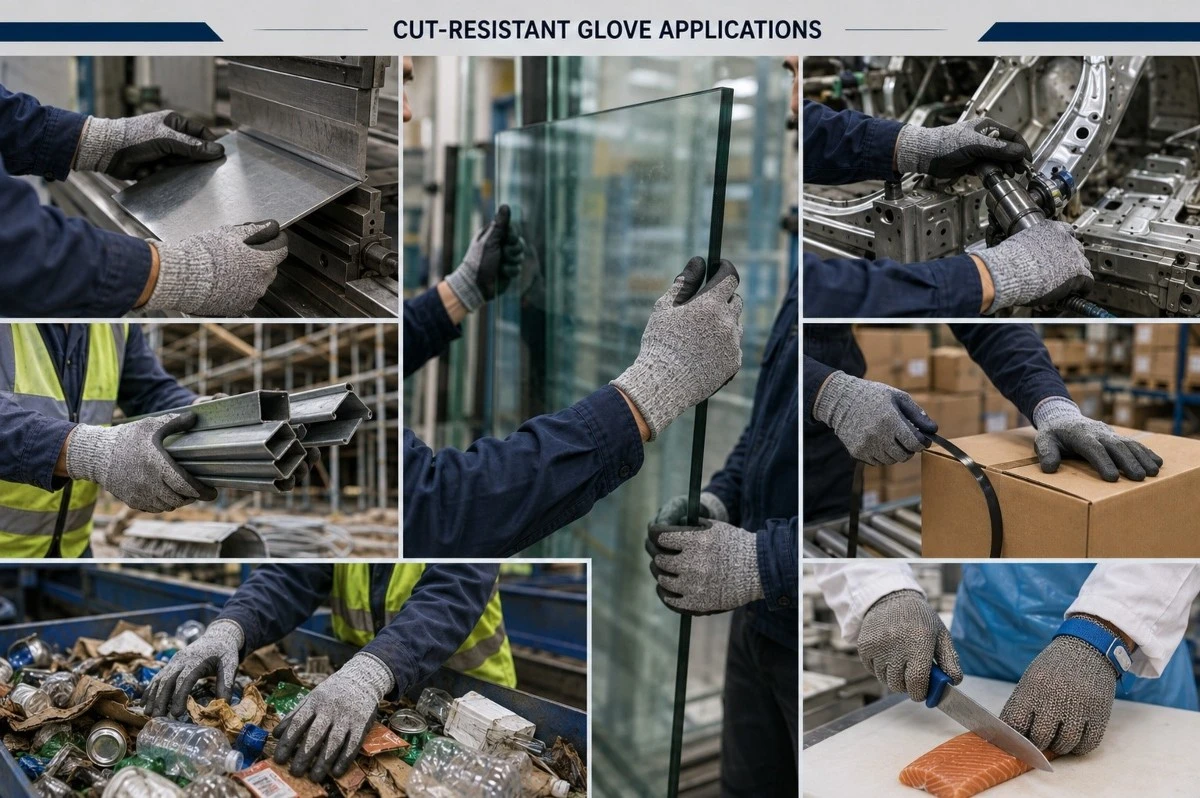
1. Different Glass Handling Jobs Require Different Gloves
Before comparing materials, it helps to understand what workers actually do.
Glass handling covers several different operations, and each creates different demands on hand protection.
Flat Glass Manufacturing and Processing
Workers may move large glass sheets between cutting, grinding, polishing and inspection stations. Sharp edges are a major concern, while grip and glove durability are important during repeated handling.
Glass Installation and Glazing
Glaziers handle glass panels, windows and architectural glass components. Depending on the job, they may need a combination of cut protection, secure grip and good finger control.
Glass Bottle and Container Manufacturing
Workers handling glass containers need gloves that allow them to maintain control of individual products. Dexterity and abrasion resistance can be important, especially during inspection, sorting and packaging.
Glass Recycling
Recycling operations may involve irregular pieces, broken edges and contaminated materials. These conditions require a more careful risk assessment, including consideration of puncture and impact hazards.
The first step in glove selection should always be identifying the material being handled and the actual contact conditions.
2. Choosing the Right Liner: HPPE, Fiberglass and Aramid
The liner is the foundation of a cut resistant glove. It determines much of the glove's cut protection performance, flexibility, fit and comfort.
HPPE Liners
HPPE (High-Performance Polyethylene) is widely used in industrial cut resistant gloves.
Its main advantages include:
- High strength relative to its weight.
- Lightweight and flexible construction.
- Good comfort for extended wear.
- Compatibility with different coating options.
- Suitable for a range of industrial cut protection requirements.
HPPE is a practical starting point for many glass handling applications, particularly where workers need a balance between cut protection and finger movement.
However, not all HPPE gloves offer the same protection. Yarn composition, reinforcement and knitting construction all influence the final test result.
HPPE and Fiberglass Blended Liners
Some cut resistant gloves combine HPPE with fiberglass reinforcement.
This construction can provide higher cut resistance without making the glove excessively bulky.
For applications involving frequent contact with sharp glass edges, reinforced yarn blends may be worth evaluating.
One important consideration is liner comfort. The fiber should be properly covered within the yarn structure to reduce the possibility of exposed reinforcement causing irritation.
Buyers should evaluate the finished glove, not simply rely on the material description.
Aramid Liners
Aramid fibers are another option for industrial protective gloves.
They offer good mechanical strength and heat resistance, making them useful in applications where workers may encounter both cut and heat hazards.
For ordinary room-temperature glass handling, however, an aramid liner is not automatically a better choice than HPPE.
The decision should depend on the actual working conditions and required protection.
3. PU, Nitrile or Latex: Which Coating Works Best?
The coating is particularly important in glass handling because it affects the contact between the worker's hand and the glass surface.
Three commonly used options are PU, nitrile and latex.
PU Coated Gloves
Polyurethane (PU) is commonly used when workers need a lightweight glove with good finger sensitivity.
Typical advantages include:
- Thin coating construction.
- Good flexibility.
- Suitable for precise handling.
- Good grip on many clean, dry surfaces.
- Relatively low bulk around the fingertips.
PU-coated HPPE gloves can be a suitable option for inspection, sorting and handling smaller glass components.
Their main limitation is that thin PU coatings may wear faster under repeated contact with rough edges or abrasive surfaces.
For heavy-duty glass sheet handling, buyers should check coating durability carefully.
Nitrile Coated Gloves
Nitrile coatings are available in different finishes, including smooth nitrile, foam nitrile and sandy nitrile.
Each offers different handling characteristics.
Smooth Nitrile
Provides a more continuous coating surface and is often considered where abrasion resistance and contact with dirt or light oil are concerns.
Foam Nitrile
Offers a softer, more flexible coating feel. It can be useful where workers need a balance of grip and comfort.
Sandy Nitrile
Has a textured surface that can improve grip in certain challenging handling conditions.
For glass processing, the choice should depend on whether workers handle clean glass, dusty components or surfaces with other contaminants.
Nitrile is not automatically the best option for wet glass. Actual grip should be evaluated using the glass surface and conditions found in the workplace.
Latex Coated Gloves
Latex coatings are widely used in general industrial handling gloves.
Their main advantages include:
- Good dry grip.
- Strong grip on many wet or rough surfaces.
- Flexible coating options.
- Textured finishes such as crinkle latex.
Latex crinkle coating is worth considering for workers who need a textured gripping surface during general material handling.
However, latex is not suitable for every application. Natural rubber latex sensitivity should be considered when selecting gloves for a workforce.
For buyers supplying multiple markets, applicable customer requirements and material restrictions should also be reviewed.
4. How to Choose Grip for Different Glass Surfaces
Grip performance is often overlooked during glove sourcing.
A glove may achieve a good cut resistance result but still be difficult to use if workers cannot maintain control of the glass.
The following comparison can help buyers narrow down their options.
| Glass handling condition | Construction to evaluate | Main consideration |
|---|---|---|
| Clean, dry glass | PU-coated HPPE | Dexterity and surface contact |
| Repetitive handling of glass components | Nitrile-coated HPPE | Abrasion and coating durability |
| Rough or textured glass | Textured nitrile or latex | Grip and wear resistance |
| Wet glass | Suitable textured coating | Actual wet-grip testing |
| Sharp glass edges | Reinforced cut-resistant liner | Verified cut performance |
| Small glass products | Thin, well-fitted liner | Finger sensitivity |
This table is a starting point rather than a universal specification.
Glass surfaces vary considerably. A smooth glass panel, a ground glass edge and a wet glass container do not create the same gripping conditions.
For this reason, it is better to test glove samples using the actual products handled by workers.
5. Why Glove Fit and Dexterity Matter
Glass handling often requires workers to control the position of a panel while coordinating both hands.
If a glove is too loose, it can reduce control and make it harder to hold smaller components.
If it is too thick, workers may struggle with precise movements.
When comparing samples, buyers should pay attention to:
- Finger fit: The glove should fit closely without restricting movement.
- Palm flexibility: Workers should be able to grip and reposition glass without excessive resistance from the coating.
- Liner comfort: The inside should feel comfortable during extended use, without irritating exposed reinforcement fibers.
- Cuff design: The cuff should fit properly with the worker's other protective equipment.
- Breathability: A suitable liner can help improve comfort during long shifts.
Knitting gauge also affects the overall feel. A finer gauge may provide a closer fit and better fingertip sensitivity, while a heavier construction may be more appropriate for demanding material handling.
However, gauge alone does not determine cut protection. The finished glove must be evaluated against the relevant standard.
6. What Cut Resistance Level Is Needed for Glass Handling?
Glass processing can involve very different levels of cutting risk.
For this reason, buyers should avoid selecting a glove simply because it carries a high ANSI or EN 388 cut rating.
In North America, ANSI/ISEA 105 classifies cut resistance from A1 to A9.
In Europe, EN 388 includes mechanical protection testing, with the ISO 13997 TDM result used to classify cut resistance at higher levels.
The appropriate level depends on the glass type, edge condition, handling frequency and workplace risk assessment.
For example:
Handling finished glass components may require a different specification from handling freshly cut glass sheets.
Repeated contact with sharp edges may require a reinforced liner.
Work involving broken glass may require additional protection against puncture and other mechanical hazards.
Cut resistance should not be confused with puncture protection. A glove that performs well in a cut test is not necessarily designed to stop glass fragments from penetrating the palm.
Gloves also cannot replace appropriate glass handling equipment, edge protection or safe lifting procedures.
Always check the actual test report for the finished glove.
7. What Should Buyers Check Before Placing a Bulk Order?
For distributors, importers and glass manufacturing companies, a sample evaluation can help avoid choosing a glove that looks suitable on paper but performs poorly in production.
Here are some practical points to check:
1. Liner specification
Confirm the fiber composition, knitting gauge and target cut protection level.
2. Coating coverage
Check whether the glove has palm coating, three-quarter coating or full coating. The required coverage depends on the handling task.
3. Grip performance
Test the glove with the actual glass products, including the surface conditions workers encounter during normal production.
4. Coating durability
Observe whether the coating wears down after repeated handling and contact with glass edges.
5. Comfort and sizing
Ask workers to try different sizes and check whether the gloves remain comfortable during normal working movements.
6. Test documentation
Request the relevant EN 388 or ANSI/ISEA 105 test reports and confirm that the documentation applies to the selected construction.
7. Packaging and customization
For distributors and private-label buyers, confirm size distribution, product labeling, packaging and logo requirements before mass production.
A small sample trial is usually more useful than making a purchasing decision based only on a product photograph or material list.
8. OEM Glass Handling Gloves from NEXPROTEC
Different glass processing customers may require different combinations of liner materials and coatings.
Some prioritize a lightweight glove for inspection and sorting. Others need a more substantial construction for repeated handling of sharp glass edges.
NEXPROTEC manufactures seamless knitted cut resistant gloves with different liner and coating configurations.
Available options include:
- HPPE and reinforced yarn blends.
- Different knitting gauges, including 7G, 10G, 13G, 15G and 18G.
- PU palm coating.
- Smooth and textured nitrile coating.
- Latex and crinkle latex coating.
- Customized liner and coating colors.
- Private-label branding and packaging.
For OEM and ODM projects, buyers can discuss the intended glass handling application, target cut resistance, coating preference, sizes and packaging requirements.
We recommend confirming the glove construction through sample evaluation and relevant performance testing before bulk production.
Frequently Asked Questions
What are the best gloves for handling glass sheets?
The best choice depends on the glass edge condition, handling process and required cut protection. HPPE cut resistant gloves with suitable PU, nitrile or latex coatings are common options to evaluate.
Are HPPE gloves suitable for glass handling?
Yes. HPPE-blend liners are widely used in cut resistant industrial gloves. Their suitability depends on the finished glove's tested performance and the hazards involved.
Is PU or nitrile better for glass handling?
PU is often considered for lightweight, precise handling of clean glass. Nitrile offers several coating finishes for different industrial conditions. The best option should be confirmed through practical grip and durability testing.
Are latex-coated gloves good for handling glass?
Latex coatings can provide good grip, particularly with textured finishes such as crinkle latex. Buyers should also consider latex sensitivity and the actual working conditions.
Do glass handling gloves need to be waterproof?
Not necessarily. Some operations involve dry glass, while others involve wet processing or washing. Coating coverage and water resistance should be selected according to the application.
Can ordinary cut resistant gloves protect workers when handling broken glass?
Not necessarily. Broken glass can create both cutting and puncture hazards. The glove must be selected based on a full workplace risk assessment, and appropriate tools and handling procedures are essential.
Final Thoughts
There is no single glove construction that works best for every glass handling operation.
The liner provides the foundation for cut protection, while the coating affects grip, wear and handling comfort. Choosing the right combination requires an understanding of the glass surface, edge condition and daily working process.
For industrial buyers, testing samples under actual working conditions is one of the most reliable ways to compare different glove designs before placing a bulk order.
Looking for cut resistant gloves for glass manufacturing or processing? Contact NEXPROTEC to discuss HPPE liner options, coating combinations and OEM glove development.
Send Inquiry